An education ordered toward wisdom
More than rigorous. Formative by design.
Classical methods train the mind. Lutheran theology tells us what that training is for: receiving truth with humility and serving our neighbors in Christian freedom.
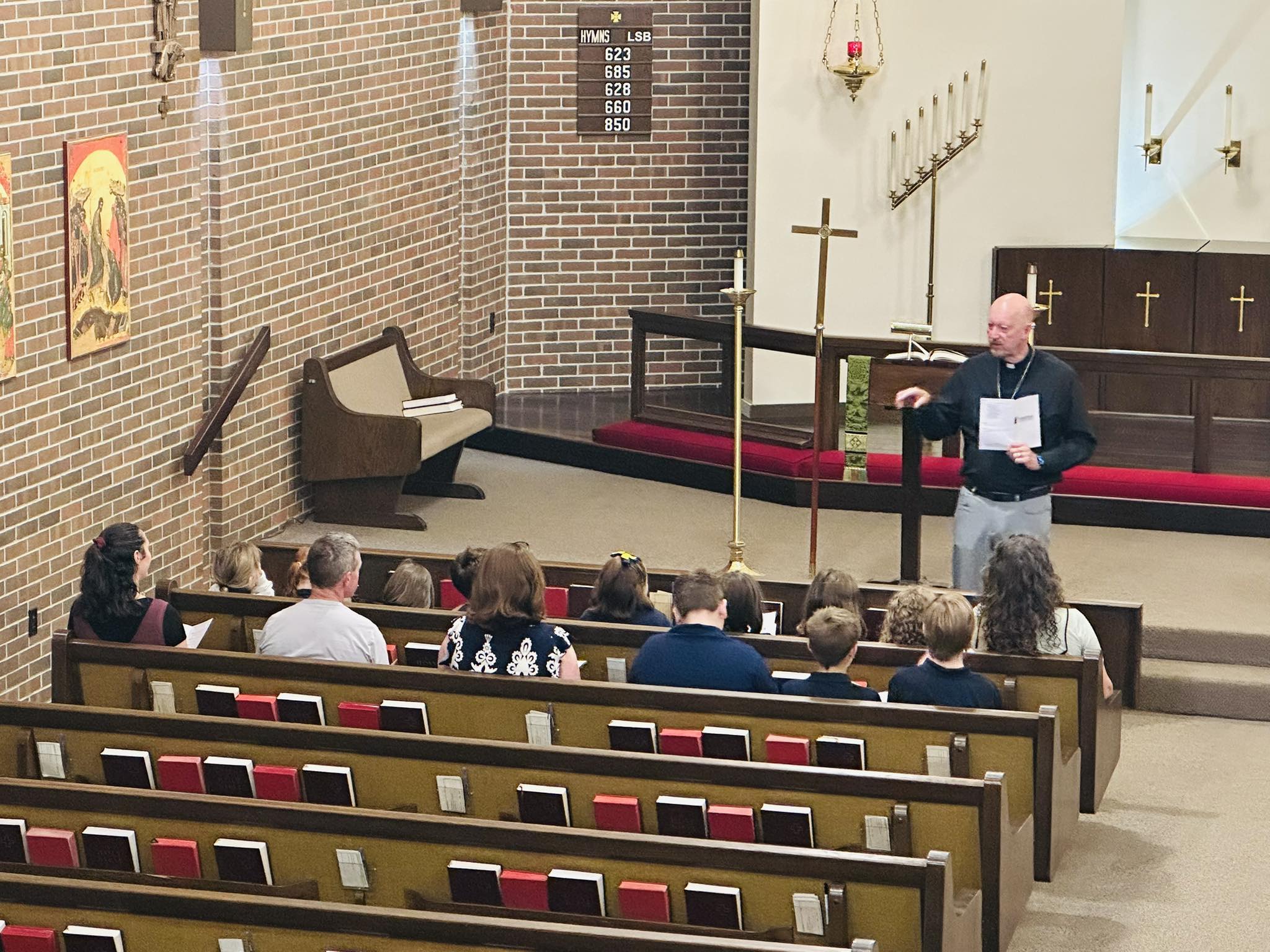
Every education forms a child. The question is not whether formation is happening, but what kind of person a school is helping a child become. At Veritas, we want students who can pay attention, remember what matters, reason honestly, speak clearly, receive God’s gifts with gratitude, and use their abilities in service to others.
Why classical?
A classical education gives children the tools of learning and brings them into conversation with the best of our inherited language, literature, history, mathematics, music, and art. Students do not merely collect disconnected facts. They learn an ordered body of knowledge, see relationships among subjects, and grow in the arts of grammar, logic, and rhetoric.
In the younger years, students build memory, vocabulary, number sense, and habits of careful work. As they mature, they increasingly ask good questions, test conclusions, make distinctions, and communicate persuasively. Recitation, memorization, imitation, discussion, and sustained practice are used because lasting mastery gives students freedom to think.
Why Lutheran?
Classical tools are powerful, but tools alone cannot tell us what is true about God, humanity, sin, forgiveness, or salvation. Holy Scripture does. Veritas is intentionally Lutheran because the Gospel of Jesus Christ—not achievement, self-invention, or even human virtue—is the center of our life together.
Students learn to distinguish God’s Law, which speaks truthfully about what He commands and about our sin, from His Gospel, which freely gives forgiveness and life because of Christ. This protects academic excellence from becoming a measure of a child’s worth. Students are challenged to do excellent work while hearing clearly that their identity and salvation are gifts of grace.
A complete vision of formation
The Consortium for Classical Lutheran Education describes classical Lutheran education as the liberal arts joined to Lutheran catechesis under Scripture and the Lutheran Confessions. That union matters. We cultivate intellect, imagination, language, character, and bodily habits together, while recognizing parents as children’s first and most important teachers.
The result is neither a museum of the past nor a generic Christian school with classical decoration. It is an education for real life: preparing children to understand the world, confess the faith, carry out their vocations, and love the neighbors God places before them.
What families will see
- Knowledge-rich lessons and carefully chosen books rather than disconnected activities
- Direct instruction, guided practice, recitation, discussion, and meaningful repetition
- Latin and the close study of language as training in precision, memory, and thought
- Scripture, catechesis, prayer, hymnody, and chapel woven into the school’s shared life
- Teachers who tell the truth, extend forgiveness, and expect students to grow in responsibility
- Partnership with parents in the education and formation of their children
Explore the Veritas curriculum and our use of Memoria Press, or plan a visit to see this approach in practice.